The Sufi master who inspired Rumi — 852 ghazals translated line by line, plus the allegorical masterwork Conference of the Birds. Available in 3 bilingual volumes on Amazon KDP.
Farid ud-Din Attar was a Persian poet, Sufi mystic, and pharmacist (attar means perfume-maker or druggist) who lived in Nishapur during the 12th and 13th centuries. According to tradition, he met the young Rumi as a child and handed him a copy of his Asrar-Nama — a meeting that would profoundly shape the course of Persian mystical poetry.
Attar's greatest work is the Manteq al-Tayr (Conference of the Birds) — a Sufi allegory in which thirty birds journey across seven valleys to find the Simorgh, only to discover that si morgh means "thirty birds" — they themselves are what they were seeking. Rumi later said that Attar had traversed the seven cities of Love while he himself was still in the first alley.
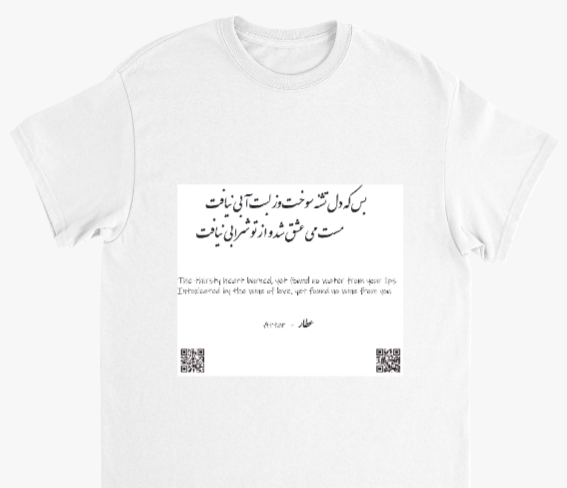
The verse printed on the Attar T-shirt — a couplet from the Divan that captures Attar's characteristic voice: longing, burning, and the wine of love withheld.
Farid ud-Din Attar was born in Nishapur around 1145 CE and died during the Mongol invasion of the city in 1221. His name means "perfume-maker" or "druggist" — he reportedly ran a pharmacy in Nishapur where he composed poetry while attending to hundreds of customers each day.
Attar's place in the Sufi literary tradition is unique: he stands between Sanai (the first major Sufi poet) and Rumi (the greatest), and profoundly influenced both. Rumi himself acknowledged this debt repeatedly — once saying that Attar had traversed the seven cities of Love (the seven valleys of the Conference of the Birds) while he, Rumi, was still in the first alley.
Attar's Divan contains 852 ghazals written in pure Persian — mystical love poetry of intense longing, using the familiar Sufi imagery of the moth and the flame, the thirsty heart, and the wine of divine love. His poetry is characterised by simple language carrying extraordinarily complex spiritual content.
Attar was one of the most prolific Sufi poets — his works range from the lyric ghazals of the Divan to the vast allegorical masnavis that define his lasting influence on world literature.
The allegorical masnavi in which thirty birds journey through seven valleys to find the Simorgh — discovering at the end that they themselves are what they sought. The defining text of Persian Sufi allegory.
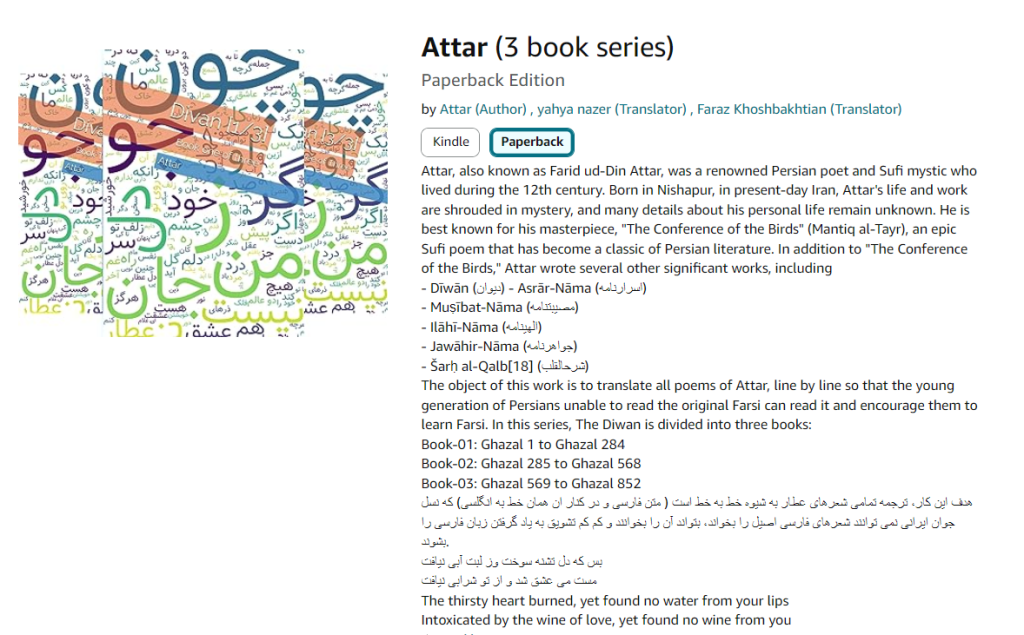
852 ghazals of lyric Sufi poetry — the largest corpus of any poet we have translated. Published in 3 bilingual volumes, available on Amazon KDP.
The masnavi that Attar reportedly gave to the young Rumi — a mystical poem on divine secrets that Rumi carried throughout his life and acknowledged as a foundational influence.
A spiritual masnavi in which the intellect journeys through forty stages of consciousness, consulting prophets, angels, and the elements — before finding the answer within the heart.
A frame narrative in which a king's six sons each express a worldly desire — and the king responds with mystical parables explaining the true nature of what each son seeks.
A lesser-known mystical work attributed to Attar — exploring the inner jewels of the spirit, the hidden treasures of the soul's journey toward divine union.
In the Conference of the Birds, the hoopoe leads the assembled birds through seven valleys on their quest to find the Simorgh. Each valley represents a stage of the Sufi spiritual journey — from initial seeking to final annihilation of the self.
The complete 852-ghazal Divan of Attar translated line by line — Farsi original alongside faithful English translation — published in 3 volumes. Each available in Kindle and Paperback on Amazon.
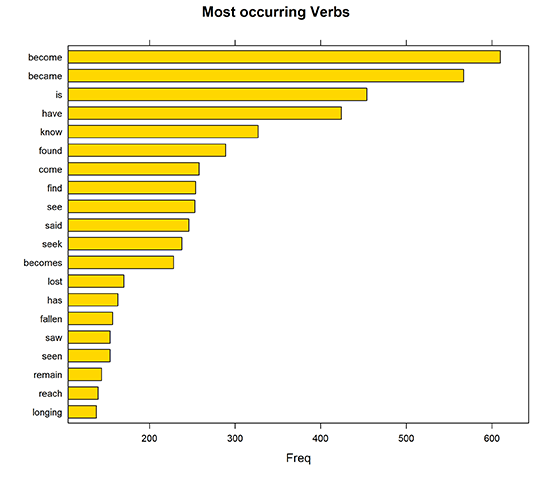
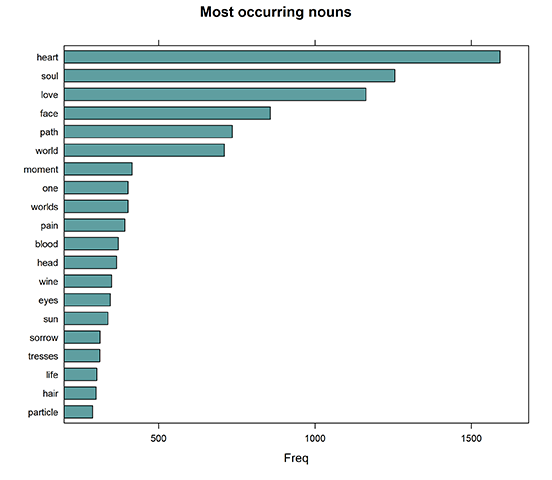
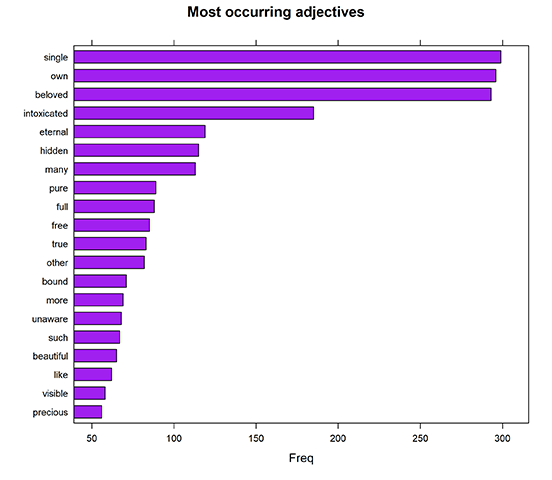
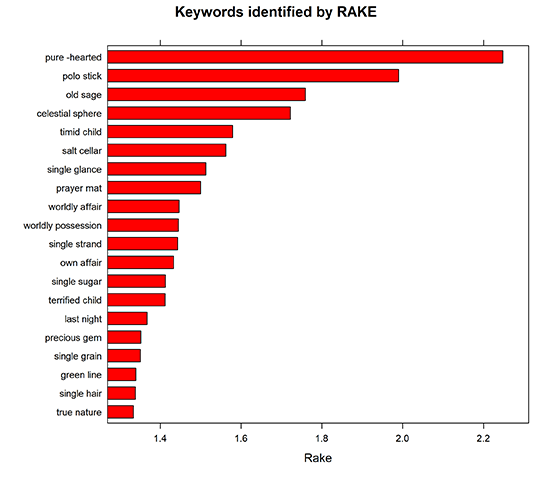
Four NLP visualisations of the English translation — verbs, nouns, adjectives, and RAKE key phrases. The dominant words confirm Attar's Sufi themes: heart (1,705 times), soul (1,481), love (1,263), become (1,488). See the full analysis on the Analysis page.
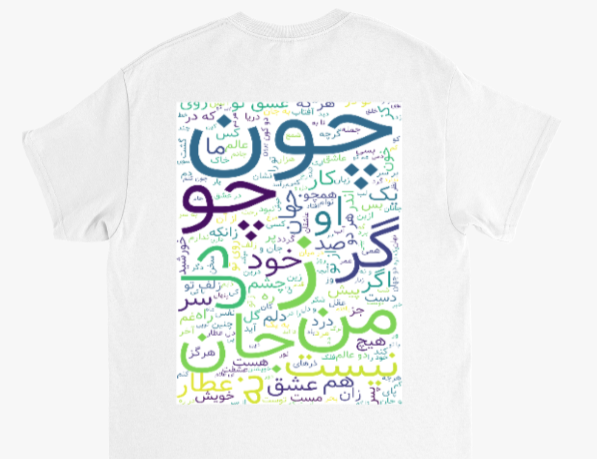
Wear the most celebrated couplet of Attar's Divan — Farsi on the front, English on the back. Heavyweight unisex crewneck, all sizes available on Etsy.