Hakim Abu’l-Qasim Ferdowsi Tusi

Ferdowsi
of Tus

فردوسیِ توسی
c. 940–1020 CE — Tus, Khorasan (present-day Iran)

Abu’l-Qasim Ferdowsi spent thirty years composing the Shahnameh — the longest epic poem written by a single poet. He worked in deliberate, pure Farsi, consciously avoiding Arabic loanwords to revive and preserve the Persian language after the Arab conquest.

The Shahnameh begins with the creation of the world and ends with the fall of the Sassanid Empire to the Arab-Muslim conquest in 651 CE. Its heroes — Rostam, Siavash, Bizhan and Manizheh — have become the defining figures of Persian cultural memory.

61
Stories
775
Chapters
49,473
Couplets
12
Volumes
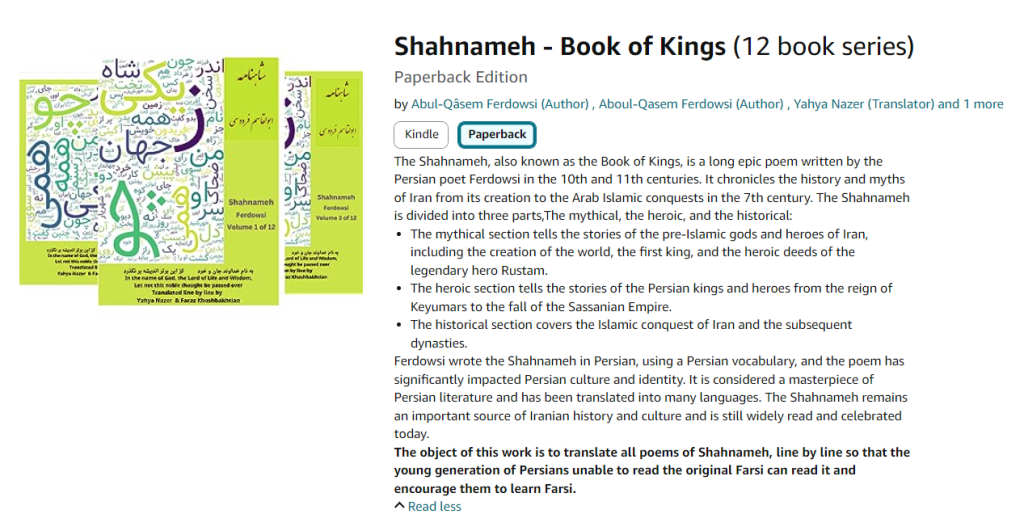
Word Map of the Shahnameh — نقشهٔ واژگانی
Word Map of the Shahnameh — Ferdowsi

The Fall of Zahhak

One of the Shahnameh's defining passages — the defeat of the tyrant Zahhak by the hero Fereydun, aided by Kaveh the Blacksmith.

Opening — ShahnamehIn the name of God, the Lord of Life and Wisdom —Let not this noble thought pass unrecorded.
The Fall of ZahhakThus was the doom of Zahhak fulfilled by Fereydun,the legendary hero of Iran.
With his army at his side, Fereydun rose against the tyrant,crossed the roaring Arvand, and advanced upon Zahhak's stronghold.
With the aid of Kaveh the Blacksmith and faithful companions,he struck Zahhak down, bound him in cowhide,and bore him to the heights of Mount Damavand.
There, within the heart of the mountain, Zahhak was chained —condemned to endure the reckoning of his deeds.
And so ended the thousand-year reign of cruelty and oppression.
Original CoupletThe capital of Zahhak was —That he was un-Persian and impure.
آغازِ شاهنامهبه نامِ خداوندِ جان و خردکز این برتر اندیشه بر نگذرد
فرجامِ ضحاکچنین بود که سرانجامِ ضحاک به دستِ فریدون رقم خورد،قهرمانِ افسانه‌ایِ ایران.
فریدون با سپاهِ خویش بر ضدِ بیداد برخاست،از خروشِ اروند گذشت و به دژِ ستم رسید.
با یاریِ کاوهٔ آهنگر و دلیرانِ هم‌پیمانش،ضحاک را درهم شکست؛ او را به چرمِ گاو فروبستو به فرازِ کوهِ دماوند برد.
در ژرفای آن کوه، زنجیرش کردتا کیفرِ کردارِ خویش ببیند.
و بدین‌سان، پادشاهیِ هزارسالهٔ بیداد و خون به پایان آمد.
بیتِ اصلیسرمایهٔ آن ز ضحاک بودکه ناپارسا بود و ناپاک بود

Ferdowsi — Defender of the Persian Tongue

Hakim Abu’l-Qasim Ferdowsi Tusi was born around 940 CE in the village of Paj, near the city of Tus in Khorasan. A landowner by birth, he had the leisure and education to devote his life to poetry — and he chose to dedicate it to a single work: the Shahnameh.

Ferdowsi completed the Shahnameh during the Samanid and early Ghaznavid dynasties. The epic consists of approximately 50,000 couplets, divided into three ages: the mythical age (from creation to the first kings), the heroic age (dominated by the hero Rostam), and the historical age (from the Achaemenids to the Arab conquest).

One of the Shahnameh's most significant contributions is its preservation of pre-Islamic Persian culture, mythology, and — above all — the Persian language itself. Ferdowsi is said to have used only a handful of Arabic words in 50,000 couplets. As he wrote in the epilogue: "I have toiled much in these thirty years — and with this Dari tongue, revived the Persian tongue."

"I have toiled much in these thirty years —
And with this Dari tongue, revived the Persian tongue."
بسی رنج بردم در این سال سی
عجم زنده کردم بدین پارسی
Ferdowsi — Shahnameh, Epilogue
Key Facts — Shahnameh
Full NameHakim Abu’l-Qasim Ferdowsi Tusi
Bornc. 940 CE, Paj, near Tus, Khorasan
Diedc. 1020 CE, Tus, Khorasan
GenreEpic poetry (حماسی)
LanguagePure Persian — minimal Arabic loanwords
Writtenc. 977–1010 CE (33 years)
Stories61 stories in 775 chapters
Couplets49,473 rhyming couplets
Our Edition12 bilingual volumes, 7,358 total pages
StructureMythical age → Heroic age → Historical age
Ends WithArab-Muslim conquest of Persia (651 CE)

The 12‑Volume Bilingual Series

The complete Shahnameh translated line by line — Farsi original alongside faithful English translation — published in 12 volumes totalling 7,358 pages. Each volume is available in Kindle and Paperback on Amazon.

Shahnameh 12-Volume Series on Amazon
01
Keyumars to Manuchehr
کیومرث تا منوچهر

Shahnameh [01/12]

555 pages
Buy on Amazon
02
Nowzar to Sohrab
نوذر تا سهراب

Shahnameh [02/12]

552 pages
Buy on Amazon
03
Siavash & Kay Khosrow
سیاوش و کیخسرو

Shahnameh [03/12]

770 pages
Buy on Amazon
04
Bizhan & Manizheh
بیژن و منیژه

Shahnameh [04/12]

637 pages
Buy on Amazon
05
The Twelve Faces
دوازده رخ

Shahnameh [05/12]

688 pages
Buy on Amazon
06
Lohrasp & Gashtasp
لهراسپ و گشتاسپ

Shahnameh [06/12]

627 pages
Buy on Amazon
07
Rostam & Esfandiar
رستم و اسفندیار

Shahnameh [07/12]

767 pages
Buy on Amazon
08
Arsacids to Shapur III
اشکانیان تا شاپور

Shahnameh [08/12]

509 pages
Buy on Amazon
09
Bahram Gur & Qobad
بهرام گور و قباد

Shahnameh [09/12]

497 pages
Buy on Amazon
10
Khosrow Noshirvan
نوشین‌روان

Shahnameh [10/12]

631 pages
Buy on Amazon
11
Hormozd & Khosrow Parviz
هرمزد و خسرو پرویز

Shahnameh [11/12]

590 pages
Buy on Amazon
12
The Last Kings & Yazdgerd
آخرین پادشاهان

Shahnameh [12/12]

535 pages
Buy on Amazon

All 62 Stories & Sections

The complete contents of the Shahnameh — 62 sections across 12 volumes, from the creation of the world (Keyumars) to the final kingdom of Yazdgerd and the Arab conquest.

#BookStory / Sectionعنوانِ فارسی
Book 01 — Keyumars to Manuchehr
101Beginning of the Bookآغازِ کتاب
201Keyumarsکیومرث
301Houshangهوشنگ
401Tahmuresطهمورث
501Jamshidجمشید
601Zahhakضحاک
701Freydunفریدون
801Manuchehrمنوچهر
Book 02 — Nowzar to Sohrab
902The Reign of Nowzarپادشاهی نوذر
1002The Reign of Zohakmaspپادشاهی زوطهماسپ
1102The Reign of Garsaspپادشاهی گرشاسپ
1202Keykavusکیقباد
1302Keykavus and his Journey to Mazandaranپادشاهی کی‌کاووس و رفتن او به مازندران
1402The Battle of Kavus with the King of Hamavarرزمِ کاووس با شاهِ هاماوران
1502Sohrabسهراب
Book 03 — Siavash & Kay Khosrow
1603The Story of Siavashداستانِ سیاوش
1703The Reign of Kay Khosrow (sixty years)پادشاهی کیخسرو شصت سال بود
1803The Story of Siavash's Descentگفتار اندر داستانِ فرودِ سیاوش
Book 04 — Bizhan & Manizheh
1904The Story of Kamus Kashaniداستانِ کاموسِ کشانی
2004The Story of Khaghan-e-Chinداستانِ خاقانِ چین
2104The Story of Ekwand-e-Deevداستانِ اکوانِ دیو
2204The Story of Bizhan and Manizhehداستانِ بیژن و منیژه
Book 05 — The Twelve Faces
2305The Story of the Twelve Facesداستانِ دوازده رخ
2405The Great War of Kay Khosrow with Afrasiyabجنگِ بزرگِ کیخسرو با افراسیاب
Book 06 — Lohrasp to Haftkhwan
2506The Great War of Kay Khosrow with Afrasiyab (cont.)جنگِ بزرگِ کیخسرو با افراسیاب
2606The Reign of Lohraspپادشاهی لهراسپ
2706The Reign of Gashtasp (one hundred and twenty years)پادشاهی گشتاسپ صد و بیست سال بود
2806The Story of Haftkhwan-e-Esfandiarداستانِ هفتخوانِ اسفندیار
Book 07 — Rostam & Historical Kings
2907The Story of Rostam and Esfandiarداستانِ رستم و اسفندیار
3007The Story of Rostam and Shaghadداستانِ رستم و شغاد
3107The Reign of Bahman-e-Esfandiar (112 years)پادشاهی بهمنِ اسفندیار
3207The Reign of Homay Chehrzad (32 years)پادشاهی همایِ چهرزاد
3307The Reign of Dara (12 years)پادشاهی داراب
3407The Reign of Dara’s son Dara (14 years)پادشاهی دارایِ داراب
3507The Reign of Alexanderپادشاهی اسکندر
Book 08 — Arsacids to Sassanids
3608The Reign of the Arsacidsپادشاهی اشکانیان
3708The Reign of Ardeshirپادشاهی اردشیر
3808The Reign of Shapur son of Ardeshir (31 years)پادشاهی شاپورِ پسرِ اردشیر
39–4908Reigns of Ormuzd, Bahram, Narsi, Shapur Zolaktaf & othersپادشاهانِ ساسانی
Book 09 — Bahram Gur to Qobad
5009The Reign of Bahram Gurپادشاهی بهرامِ گور
5109The Reign of Yazdgerd (18 years)پادشاهی یزدگرد
5209The Kingdom of Qobad (43 years)پادشاهی قباد
Book 10 — Khosrow Noshirvan
5310The Kingdom of Khosrow-e Noshirvan (48 years)پادشاهی کسریِ نوشین‌روان
Books 11–12 — Final Sassanid Kings
5411The Kingdom of Hormozd (12 years)پادشاهی هرمزد
5511The Kingdom of Khosrow Parvizپادشاهی خسروِ پرویز
5612The Kingdom of Shiruyeپادشاهی شیرویه
57–6112Ardeshir, Farayin, Purandokht, Azardokht, Farokhzadآخرین پادشاهان
6212The Kingdom of Yazdgerd — End of the Sassanid Empireپادشاهی یزدگرد — پایانِ ساسانیان

Top Words in the Original Farsi

The 30 most frequent words in the original Farsi text of the Shahnameh — showing the pure Farsi vocabulary Ferdowsi deliberately chose to preserve.

#واژهCount

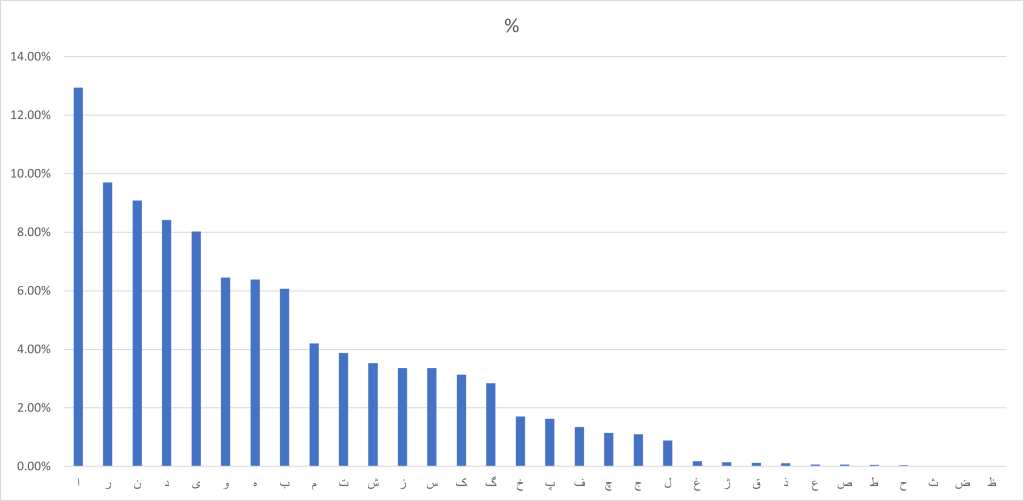
Letter Distribution in Ferdowsi's Farsi

The frequency of each letter of the Farsi alphabet across the full Shahnameh — revealing the phonetic texture of pure Persian. Letters with Arabic origin (ق، ع، ص، ط، ح…) appear with notably low frequency, confirming Ferdowsi's pure Farsi.

Farsi Alphabet Frequency — Shahnameh

Percentage and count of each letter across all 49,473 couplets

Farsi Alphabet Frequency Chart — Shahnameh
Previous
Continue Reading
Up Next — Divan-e Hafez
Divan-e Hafez